


 RSS Feed (xml)
The omer is a tough time for me because music is so important to me. To go 40 days without music and then not long after another 3 weeks is difficult, especially during the spring and summer when there are so many more opportunities to hear live music.
I also never understood how a capella music is acceptable. If the omer is a mourning period, how does a capella music change anything? Musical instruments don't inherently promote joy and a capella music is in fact often joyous (and terribly kitschy in the modern Ashkenazi world).
I looked up the source of this minhag and was surprised at the result. The ban against music is not found anywhere in the Mishnah, Gemara, or even the Shulchan Aruch. The earliest source is found in a 17th century commentary on the Shulchan Aruch known as the Magen Avraham who argues that celebrational dancing is forbidden. In order to prevent people from dancing in a celebratory way, such as at a wedding or a bar mitzvah, he included that any type of music that brings people to get up and dance is also impermissible. But the logic would follow that music that doesn't encourage shaking your booty, but rather is downtempo, reflective, and most importantly spiritually exalting, is permitted (and maybe even encouraged since it evokes an atmosphere of mourning). Thus, the custom of not listening to music at all is only a chumra (an extra stringency) and the custom of only listening to a capella music is simply misguided.
This leads me to argue that the later rabbis who invented this chumra of only listening to a capella music didn't understand music at all and probably didn't really listen to it themselves. While a capella music can certainly be spiritually exalting (just ask a Catholic - in fact the term itself is Italian for "in the style of the church) it isn't necessarily, and if you have ever heard some of the "omer friendly" music they are trying to sell in music stores here in Jerusalem, you might just lean over and wretch - an act that I would consider not spiritually exalting. They aren't just bad, they also are upbeat and dancy - just because there are no instruments doesn't mean a song with a good rhythm won't encourage you to get up and dance.
It means that unfortunately, I will not be listening to any funk, disco, or electro for the next 40 days, but uplifting genres like classical, post-rock, ambient, maybe some Bon Iver, these are genres I feel comfortable listening to. I'm still deciding which category jazz falls into - I would love to hear some opinions on the matter.
Thanks so much to Rabbi Chaim Brovender at the WebYeshiva for bringing these sources to my attention: http://www.youtube.com/watch?v=FKjYVdH-kAM
Showing posts with label Judaism. Show all posts
Showing posts with label Judaism. Show all posts
4.22.2011
1.30.2011
The Scientific Dilemma of Modeh Ani
Lately I've been reading a lot of Rabbi Nosson Slifkin's blog: Rationalist Judaism. He's the Zoo Rabbi who got put in cherem by the Lithuanian Haredi community for saying such controversial things as "the world is older than 6000 years" and "science has disproven spontaneous generation." But he writes a great blog where he discusses the scientific opinions of Chazal and whether or we should take a literal approach to those views when they contradict modern scientific findings, and he also writes really intelligent critiques of anti-rationalist rabbis.
Here's an email I wrote to him with a rationalistic halachic problem that started to bounce around in my head after reading his blog, along with my not so rationalistic solution:
"Dear Rabbi Slifkin,
I've been subscribing to your blog for a couple weeks now, and hearing your opinion about how Chazal was wrong in their understanding of certain aspects of biology and astronomy raised a question in my head about the halachot related to waking up in the morning.
I was taught that the reason we wash our hands in the morning and say a bracha on awakening and having our souls returned to us was because sleep is so closely related to death that just as you are teuma when you go near a corpse, you are also teuma when you go to sleep. Thus we wash our hands when we wake up just like we wash our hands when we leave a cemetery.
But scientifically, as I understand it, sleep is not at all related to death. No one simply passes away in their sleep. An old person dies in their sleep because of medical complications or organ failure, they don't simply pass away for no reason or because their souls did not return to them. Similarly, when I go to sleep at night, I don't actually believe that I won't wake up the next morning. Of course external forces could cause me to die in my sleep (an intruder, a natural disaster), but nothing in the way I think Chazal traditionally understood it.
Therefore, can the argument be made that Chazal held the worldview similar to other nations that sleep actually was a form of death, and that they were mistaken in that claim? If so, would that have any ramifications for the halachot of awakening such as washing hands or saying birkot hashachar?
Additionally, what would your opinion be on using Hume's Problem of Induction as a solution to this problem? The Problem of Induction states that causality is not explained through reason but actually induction, and that the effect of a cause can only be explained by referring to other occurrences of that effect, which never justify each individual effect. For example: When you drop an egg at a high altitude, you know that that egg will break not because of the elasticity of the shell reacting to gravity and the hardness of the ground, rather you believe it will break because you have seen other eggs break in the past in a similar way. Therefore you cannot actually know that an egg will break before you drop it; it is only after the egg has already broken that you can claim that it broke because of scientific properties - science can only explain the broken egg a posteriori, whereas Hume argues that a priori, reason has no weight on the fragility of that egg.
Applied to waking up in the morning, this modern philosophical problem can give a possible solution to the issue of dying in your sleep. Though modern science would claim that there is no reason you should not wake up the next morning, the Problem of Induction states that just because I woke up the previous day and all days before that does not necessitate that the next day I will wake up. So the brachot still stand because every day I can still thank G-d for waking up in the morning, as one can never empirically know that he will wake up the next day.
What is your opinion on applying the Problem of Induction to Chazal if they were mistaken about the nature of sleep while still subscribing to the halachot that they required? Do you think it's a practical solution or is it misguided? As a self-described rationalist, you probably disagree with the Empiricist school of thought, of which Hume was a proponent, but I am interested in hearing your response since I respect your opinion a lot and I really enjoy reading your thoughts.
Thanks so much,
Eric Salitsky"
UPDATE:
Rabbi Slifkin responded to me with this link (and as I imagined, he was not into the inference solution):
Netilat Yadayim: Ritual of Crisis or Dedication? (PDF)
Here's an email I wrote to him with a rationalistic halachic problem that started to bounce around in my head after reading his blog, along with my not so rationalistic solution:
"Dear Rabbi Slifkin,
I've been subscribing to your blog for a couple weeks now, and hearing your opinion about how Chazal was wrong in their understanding of certain aspects of biology and astronomy raised a question in my head about the halachot related to waking up in the morning.
I was taught that the reason we wash our hands in the morning and say a bracha on awakening and having our souls returned to us was because sleep is so closely related to death that just as you are teuma when you go near a corpse, you are also teuma when you go to sleep. Thus we wash our hands when we wake up just like we wash our hands when we leave a cemetery.
But scientifically, as I understand it, sleep is not at all related to death. No one simply passes away in their sleep. An old person dies in their sleep because of medical complications or organ failure, they don't simply pass away for no reason or because their souls did not return to them. Similarly, when I go to sleep at night, I don't actually believe that I won't wake up the next morning. Of course external forces could cause me to die in my sleep (an intruder, a natural disaster), but nothing in the way I think Chazal traditionally understood it.
Therefore, can the argument be made that Chazal held the worldview similar to other nations that sleep actually was a form of death, and that they were mistaken in that claim? If so, would that have any ramifications for the halachot of awakening such as washing hands or saying birkot hashachar?
Additionally, what would your opinion be on using Hume's Problem of Induction as a solution to this problem? The Problem of Induction states that causality is not explained through reason but actually induction, and that the effect of a cause can only be explained by referring to other occurrences of that effect, which never justify each individual effect. For example: When you drop an egg at a high altitude, you know that that egg will break not because of the elasticity of the shell reacting to gravity and the hardness of the ground, rather you believe it will break because you have seen other eggs break in the past in a similar way. Therefore you cannot actually know that an egg will break before you drop it; it is only after the egg has already broken that you can claim that it broke because of scientific properties - science can only explain the broken egg a posteriori, whereas Hume argues that a priori, reason has no weight on the fragility of that egg.
Applied to waking up in the morning, this modern philosophical problem can give a possible solution to the issue of dying in your sleep. Though modern science would claim that there is no reason you should not wake up the next morning, the Problem of Induction states that just because I woke up the previous day and all days before that does not necessitate that the next day I will wake up. So the brachot still stand because every day I can still thank G-d for waking up in the morning, as one can never empirically know that he will wake up the next day.
What is your opinion on applying the Problem of Induction to Chazal if they were mistaken about the nature of sleep while still subscribing to the halachot that they required? Do you think it's a practical solution or is it misguided? As a self-described rationalist, you probably disagree with the Empiricist school of thought, of which Hume was a proponent, but I am interested in hearing your response since I respect your opinion a lot and I really enjoy reading your thoughts.
Thanks so much,
Eric Salitsky"
UPDATE:
Rabbi Slifkin responded to me with this link (and as I imagined, he was not into the inference solution):
Netilat Yadayim: Ritual of Crisis or Dedication? (PDF)
Labelz:
halacha,
Judaism,
philosophy,
rationalism,
religion,
science

2.03.2010
Post-Modern Orthodoxy: Who's With Me!?
 I haven't been writing so much in this blog because I'm starting to see personal blogging as narcissistic and masturbatory. Who really cares what my opinion is on Israeli politics or the state of Judaism? Lately I found good use for this blog: it worked somewhat as a travel blog to record my experiences, though I had rare occasions with the internet, and it's also a good place to post my philosophical cartoons (more to come!). But I figure, I can also use this space to ramble about my thoughts and dreams so that I can have it written out and refer to it later. If someone finds it and is interested, great for them, but as of now it is mostly for me.
That being said, whoever is reading this is about to partake on a journey into my utopian vision of Judaism, a new sect which I am creating known as Post-Modern Orthodoxy!
In its most basic pshat, its just a silly play on words which means that all laws are subjective depending on who is reading into them, just as post-modern art is based in the personal interpretation of the viewer rather than the message that the artist is trying to convey.
But on a deeper level, I have many issues with the hierarchical and sectarian nature of modern Judaism which I have been trying to grapple with. I used to call myself Orthodox because of the standards that I tried to uphold, but once I started reading too many existentialist thinkers, I had problems seeing everything as objectively as an Orthodox Jew is meant to. During my encounters with progressive pluralist synagogues that challenged the standard norms of where and how each sect is supposed to pray such as Shira Hadasha, the Mission Minyan, and the Open Orthodoxy Movement, I started to think about what "Orthodoxy" meant. I decided that there are many assumptions and associations that people make about Orthodox people that I did not fit into, and I didn't like how people were categorized based on their system of belief. These progressive minyanim challenge the boundaries between sects and break down the differences between them. Why does it matter to conform to the ideology of a specific group-thinking that is mostly outdated anyways? No Conservative Jew actually believes in the power of the Rabbinic Assembly to contemporize Halachah, they do it themselves, and no Reform Jew studies enough text to actually be able to actually decide what is relevant and what is not. Even Orthodox Jews are no long reacting to liberal Judaism (at least those who are self-confident about their lifestyle or who aren't campaigning against the "Holocaust of Intermarriage").
More important than segmented affiliationism, in this day and age, is finding a spirituality that is right for you. Rather than looking to the past to figure out where one nicely fits into the puzzle, one must look to their peers in the present and decide how their community should work for them. If there are women who want to be counted in the minyan, the community should figure out how to include them. And if there are men who feel uncomfortable hearing women sing, they should also be accounted for. There are no unsurmountable Halachic standards in Post-Modern Orthodoxy, because people should not be forced to conform to a system they don't believe in. On the other hand, PMO does not throw out tradition like other denominations do. Rather than working with nothing and adding on what they feel comfortable with, as Reform Jews do, PMO Jews begin with everything and work as a community to decide what and how they should alter. That is the "Orthodox" part of PMO. This involves a lot of study with the help of every member of the community, in the same way that an Orthodox community spends a lot of time in the Beit Midrash, thus making intensive study an important part of Jewish life as it has for thousands of years. Ideally, this will result in a range of religious practice that includes an egalitarian halachic community such as Shira Hadasha as well as a more liberal pluralistic community that caters to its halachic members such as the Mission Minyan. These communities will be pluralistic, all-inclusive, and non-judgemental.
Sure, they will involve a lot of internal debate, but isn't that what Judaism is all about?
Labelz:
Judaism,
philosophy,
pluralism,
post-modern orthodoxy,
rants,
religion,
the jewish world,
utopia
10.28.2009
Religious Dialogue as a Method for Peace in the Middle East
cross-posted here from a live-blogging session at the J Street Conference on jewcy.com
Along with plenty of student bloggers at the J Street conference, I've been blown away by the excitement and the empowerment that has come out of it.
I stopped by the Jewcy booth on my way out of a breakout session on religious dialogue and was roped into sitting down and posting (although it didn't take much effort to convince me).
The panel had a prominent representative from each Abrahamic faith, all talking about how although the Israel-Palestine conflict is not inherently a religious conflict (its based in territorial and ethnic differences), religion plays a huge part in furthering differences, but it can be used to work towards peace.
One of the things that stuck with me is some of the comments that Salam Al-Marayati, the executive director of the Muslim Public Affairs Council, said. Earlier in the day, a friend of mine had said that she was concerned that while many people had been talking about Israel's faults and mistakes, no one had been rebuking the Palestinians for the rocket-fire into Sderot and for extremist rhetoric coming from Hamas. This can easily lead to a criticism of the conference for being blindly left-leaning and ignoring some of the important issues that Israelis deal with.
But what resonated with me about this panel was that Al-Murayati, the only Muslim speaker at the conference that I know of, was the most vocal in criticizing members of his own faith for their immoral actions.
This creates a critical message that I believe this conference is bringing to the Israel-Palestine debate. I fear imperialism and I fear people who impose their views on other cultures and ethnicities. One of my main criticisms of the established right-leaning pro-Israel lobby is that they rebuke Palestinians for everything they do, but see Israel as flawless and with a clean slate. But to hear Jews criticizing Jews and Muslims criticizing Muslims is to me an essential part of our individual faiths. Just as in Isaiah we have the quote, "Justice, justice you shall pursue," Al-Murayati also quoted the Koran saying (and I apologize if I vehemently misquote and paraphrase) "Oh you believers, you must promote justice even if it is against your own people and communities" and "One human life is more important than the entire Kabbah."
This is a voice that needs to be heard and publicized, especially throughout the political right, who seem to ignore it. We have an ethical responsibility to criticize ourselves and to allow space for other groups to make their own personal criticisms.
This conference is the beginning of a new movement in leftwing pro israel, pro peace, politics and to see a religious element that supports it is really awesome to see, considering my own religious background.
Labelz:
coexistence,
interfaith,
Islam,
Israel,
Judaism,
pluralism,
religion
2.11.2009
1.27.2009
Shabbat Praha
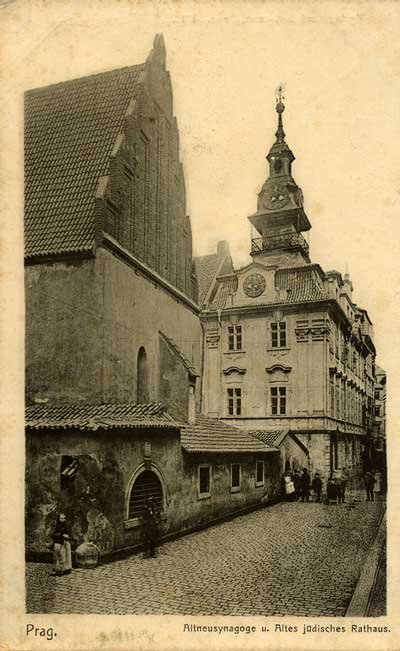
On Shabbas I checked out the Jewish community. At around 3 on Sayurday I headed over to the Jewish quarter and just wandered around, looking at all the beautiful synagogues. It’s crazy to think that the only reason these synagogues are so well preserved is because Hitler was saving them for his Jewish museum after he finished the job. I found the famous one with the golem in it and figured there would probably be mincha so I talked to the guard at the entrance. He was very unfriendly and spoke no English but it seemed apparent that his job was to keep tourists out on Shabbat. So I had a little argument with him, trying to prove to him that I just wanted to go pray, and this British guy told me that he wasn’t going to let people in for a couple minutes. So he showed me around the Jewish quarter, he showed me where the Chabad is and where the kosher restaurant is. He’s one of those Aish miracles who goes to Israel for a week, flips out, and stays in yeshiva for 2 years. He works at the British version of the Discovery channel and he’s in Prague filming for a little while. After services we went to the Jewish community center for Seudah Shlishit which was around the corner and I had a really nice time. There were a bunch of Israelis and Americans, the rabbi was cool and lives on my street, and the Czech ladies were hot.
I’m pumped to spend more time with this community. Shabbas morning services are at the Jerusalem synagogue, the most beautiful synagogue I’ve ever seen and it’s a block from my house. I also hope that I get a volunteer placement working in the Jewish community. There’s a Jewish school that I would love to work at. I added it in on my volunteering application and Jana, the lady in charge of that, told me they were going to work on it. One of the main reasons I’m here in Prague is to get to know what modern European Judaism is like. Is it growing or dying? How much of the Jewish culture is based in thousands of years of history and how much of it is just imported from America or Israel? I wanna set up a Shabbas meal for Mich and Leili and me with the rabbi. He lives like two doors down. Maybe I’ll wait until a know a little more Czech though. Tomorrow I finally start my intensive Czech classes which go on for two weeks before we start real classes. I’ll finally be able to say more than thank you, hello, and two beers please.
10.26.2008
More Jewish Animation
On the topic of awesome Jewish flash videos, this one is a little less Torah study and a little more Torah satire, but its hilarious.
God & Co. is a monthly short animated film from Nextbook that pokes fun of stories from the Torah. They did one about the sacrifice of Isaac and another on the liberation from Egypt and the latest one is about Moses talking to G-d. It's got all the witty awkward comedy and simple animation of Dr. Katz Professional Psychiatrist or Home Movies but its about the Torah!
(I just found out that Jonathan Katz is the main guy in all three of those animated comedies. I should have just assumed there was some connection)
God & Co. is a monthly short animated film from Nextbook that pokes fun of stories from the Torah. They did one about the sacrifice of Isaac and another on the liberation from Egypt and the latest one is about Moses talking to G-d. It's got all the witty awkward comedy and simple animation of Dr. Katz Professional Psychiatrist or Home Movies but its about the Torah!
(I just found out that Jonathan Katz is the main guy in all three of those animated comedies. I should have just assumed there was some connection)
10.22.2008
G-dcast Launches!
Get ready for an awesome year of animated Torah study (besides for the Kabbalah Toons)
G-dcast is the newest project to come out of Sarah Lefton, creator of the now defunct Jewish Fashion Conspiracy. I met her this summer at the Mission Minyan, and I've been pumped for Bereishit since then. These great animated parshas come out every week with a different storyteller and a different animator. It's really exciting, right?
10.02.2008
The Return of Yigal Amir
Or did he ever leave?
 (I saw this poster in Netanya, Yigal Amir's hometown. It shows a picture of Marwan Barghouti on top and says, "If terrorist murderers can be freed, then why not Yigal and Hagai Amir?")
In case you hadn't heard, anti-occupation professor Ze'ev Sternhell was targeted with a pipe bomb last week by right wing extremist settlers and sustained light injuries (B"H). It has been a while since right wing Israelis have targeted left wing Israelis and it seems to be the return of the Jewish terrorist. Right wing rabbis also also using the same rhetoric to demonize left wing leaders that was being used in '95 which eventually led to Yitzchak Rabin's assassination.
This is a very scary time to be a peacemonger in Israel. Yariv Oppenheimer, general secratary of Peace Now also was sent death threats and was assigned a whole security crew by the police since he might be next.
But something good may come out of it. Today, 150 left wing protesters appeared outside professor Sternhell's house to stand in solidarity against settler violence targeting other Jews. It was a rallying call for everyone who opposes this deterioration of morality and hopefully it was the beginning of a new movement to end settler violence.
Sternhell spoke to the crowd:
Those who forget history are doomed to repeat it.
 (I saw this poster in Netanya, Yigal Amir's hometown. It shows a picture of Marwan Barghouti on top and says, "If terrorist murderers can be freed, then why not Yigal and Hagai Amir?")
In case you hadn't heard, anti-occupation professor Ze'ev Sternhell was targeted with a pipe bomb last week by right wing extremist settlers and sustained light injuries (B"H). It has been a while since right wing Israelis have targeted left wing Israelis and it seems to be the return of the Jewish terrorist. Right wing rabbis also also using the same rhetoric to demonize left wing leaders that was being used in '95 which eventually led to Yitzchak Rabin's assassination.
This is a very scary time to be a peacemonger in Israel. Yariv Oppenheimer, general secratary of Peace Now also was sent death threats and was assigned a whole security crew by the police since he might be next.
But something good may come out of it. Today, 150 left wing protesters appeared outside professor Sternhell's house to stand in solidarity against settler violence targeting other Jews. It was a rallying call for everyone who opposes this deterioration of morality and hopefully it was the beginning of a new movement to end settler violence.
Sternhell spoke to the crowd:
"Your presence here demonstrates clearly that we can do this, that we will not live in fear, that we will not be intimidated,"Professor Naomi Chazin, former Meretz MK and president of the New Israel Fund also said some inspirational words:
"This is the beginning of a civilian uprising, of those who understand that if violence has become the norm – we have become lost. We must fight for the rules of the democratic game because if there is violence within us we can close up shop. This is what happened in other democracies in the past, which fell for this reason, and we must not allow it to happen here."Also, the connection was made between the current events and the Jewish calender (which seems to be rare at leftist events). Today is the Fast of Gedalia, a date where we mourn for the righteous Jewish governor of Judea who was assassinated by other Jews because of infighting. We fast because this event culminated in the final exile of the rest of the Jews from the Land of Israel because of lack of Ahavat Yisrael. So as Rabbi Gilad Kariv pointed out, the connection between these two events is somewhat eerie.
Those who forget history are doomed to repeat it.
9.29.2008
My Father, My King
I put this video on Jewschool in response to someone posting Phish doing Avinu Malkeinu and I figured I would post it here as well. I think Mogwai does a much better job of expressing the feelings of the high holidays. And not one of them is Jewish!
Shana Tova Umetukah! Have a great sweet new year!
Shana Tova Umetukah! Have a great sweet new year!
9.23.2008
7.18.2008
J Street Poll Proves Orthodox Jews Are Mostly Idiots
 J Street just came out with a really interesting and thorough poll of American Jewish voting patterns and their thoughts on the upcoming elections. Most of the survey was taken to show that Jews who support a peaceful solution in the Middle East and a two state solution in Israel and Palestine are in the majority, something that was brought up multiple times during the Brit Tzedek conference that I attended (you can see me in the video/conference report a bunch of times). This is a point that is very important to pro-Israel pro-peace groups like J Street and Brit Tzedek because by showing that they are the majority in Jewish political discourse, they have better leverage in trying to a build a movement among the national Jewish community.
Some interesting findings:
- 90% of American Jews are dissatisfied with the Bush administration as opposed to 76% nationally.
- 61% of American Jews believe Bush's Middle East policy has made Israel less secure.
- 81% trust that Israel would not agree to a peace deal that endangers its security and support any agreement Israel makers with its Arab neighbors.
- Compared with previous elections, the Jewish vote for Obama as the democratic nominee is the lowest it's been in a long time. According to the poll, 58% said they were definitely voting for Obama, in contrast to approximately 80% for Gore and Clinton and 76% for Kerry.
- 51% have a negative impression of Rev. John Hagee and CUFI while only 19%
wouldn't mind burning in Christian hell while all the Evangelicals float up to heaven during the Rapture as long as they can build their settlements in the West Bankhad a positive impression. - And my favorite statistic - presidential vote by religious denomination: Reform is 70% Obama, Conservative is 56% Obama, Unaffiliated/other is 67% Obama, and Orthodox is 77% McCain.
It is really difficult trying to be observant but always running into this polarization: You are either unorthodox and liberal or you are observant and right-wing, with few exceptions. I don't understand why it has to be this way. Tikkun and the NSP are supposed to be the exception, the "spiritual left". But that's exactly what they are - spiritual. There are no Orthodox Jews in the NSP (and I wouldn't blame them. It's tough to take your observance seriously when everyone else is singing Od Yavo Shalom Aleinu as a spiritual mantra, shaking a tambourine, and reading Kabbalah self-help books). I pray that one day I'll find a community to live in where I can be strengthened by both their faith in Torah (albeit a critical one) and activity in liberal politics.
By the way, I am thinking about changing the name of my blog to Bein Hashmashot. Jerusalén is just my nom de guerre in capoeira, it doesn't really have anything to do with my blog except for being the Portuguese pronunciation of Jerusalem (I got that name because, of cooas, I'm the token religious Jew in the class). If I do make the change, I'll explain the significance of bein hashmashot (twilight) when it happens.
6.18.2008
A Utopian Rant. Thanks for that Rabbi Lerner!

Sometimes I feel like the Rabbis kinda hijacked Torah.
Every mitzvah was commanded in order to be suitable for the times. The sacrafices were only done because that was the way people connected to G-d at that time, now we connect through prayer because we have progressed with time. Similarly, we were given loads of laws on kashrut because that's how people ate back then, but now we can be progessive about dietary laws by keeping vegetarian (with a hechsher tzedek of course). So too, we were polygamous at a time and now we stay devoted to one person. It's too bad there is no sanhedrin to be able to further progress in halacha. Hehe, I guess the further West I go, the more liberal I get, and the more I reconnect with my Conservative roots.
But as we can see with the recent ridiculousness of the High Rabbinical Court in Israel, a sanhedrin wouldn't be the best idea at the moment.
The only way that we can progress in halacha is if all Jews can agree on certain changes. And that can only happen if all Jews unilaterally support something (which, at the moment, seems impossible). That's why when every Jew in the world will get together and support something (or at least keep two shabbases) the moshiach will arrive. Only then can we move foreward in halacha towards a place that is objectively progessive towards a utopian society.
Now I understand better why groups like Chabad and Aish are trying to get all Jews to become more religious. I disagree with their method though, I think it is something that can only happen organically and I sure hope that in the times of moshiach everyone will not be either Chabad or Aish. I think pluralism is a more feasible option.
It definitely works, and the more I travel, the more I see it working successfully. I saw it at the Mission Minyan and I saw it on Shavuot. On Shavuot, the entire Jewish community of Berkeley got together and had a unified Tikkun Leil Shavuot where rabbis and scholars of every denomination were giving lectures or programs throughout the night. It was a beautiful thing and someone said it's the only place in the world where that happens. Obviously, not everyone in that room would agree on a utopian vision of society, but I think that working together and having dialogue with each other is better than trying to convince everyone else that your way is right. I don't think that there's one type of Judaism that right. I don't even think my way is right (whatever that way is). Just as Judaism was meant to grow with the times, so will we continue to do so in the future, and the eventual Zion will consist of a society that is greater than any that exist today.
Amen Selah!
Subscribe to:
Posts (Atom)
