



 RSS Feed (xml)

The omer is a tough time for me because music is so important to me. To go 40 days without music and then not long after another 3 weeks is difficult, especially during the spring and summer when there are so many more opportunities to hear live music.
I also never understood how a capella music is acceptable. If the omer is a mourning period, how does a capella music change anything? Musical instruments don't inherently promote joy and a capella music is in fact often joyous (and terribly kitschy in the modern Ashkenazi world).
I looked up the source of this minhag and was surprised at the result. The ban against music is not found anywhere in the Mishnah, Gemara, or even the Shulchan Aruch. The earliest source is found in a 17th century commentary on the Shulchan Aruch known as the Magen Avraham who argues that celebrational dancing is forbidden. In order to prevent people from dancing in a celebratory way, such as at a wedding or a bar mitzvah, he included that any type of music that brings people to get up and dance is also impermissible. But the logic would follow that music that doesn't encourage shaking your booty, but rather is downtempo, reflective, and most importantly spiritually exalting, is permitted (and maybe even encouraged since it evokes an atmosphere of mourning). Thus, the custom of not listening to music at all is only a chumra (an extra stringency) and the custom of only listening to a capella music is simply misguided.
This leads me to argue that the later rabbis who invented this chumra of only listening to a capella music didn't understand music at all and probably didn't really listen to it themselves. While a capella music can certainly be spiritually exalting (just ask a Catholic - in fact the term itself is Italian for "in the style of the church) it isn't necessarily, and if you have ever heard some of the "omer friendly" music they are trying to sell in music stores here in Jerusalem, you might just lean over and wretch - an act that I would consider not spiritually exalting. They aren't just bad, they also are upbeat and dancy - just because there are no instruments doesn't mean a song with a good rhythm won't encourage you to get up and dance.
It means that unfortunately, I will not be listening to any funk, disco, or electro for the next 40 days, but uplifting genres like classical, post-rock, ambient, maybe some Bon Iver, these are genres I feel comfortable listening to. I'm still deciding which category jazz falls into - I would love to hear some opinions on the matter.
Thanks so much to Rabbi Chaim Brovender at the WebYeshiva for bringing these sources to my attention: http://www.youtube.com/watch?v=FKjYVdH-kAM
4.22.2011
4.12.2011
Why the western media doesn't seem to care

These past two weeks have been somewhat difficult for me as I have been watching the political situation escalate between the IDF and Hamas.
Recently there was a terrorist bombing near the central bus station in Jerusalem, at a specific bus stop that I am at more than anyone else I know. Thank G!d I wasn't there but I heard the explosion from my house because it is only a 20 minute walk from my front door.
Then on Thursday a Hamas splinter group fired an anti-tank missile at a school bus, seriously injuring a 16 year old boy. That one bothered me all weekend long as it was hard for me to process such intentional evil. Shooting a katyusha, as terrible as it is, can't be aimed directly at anyone in particular. It shoots in a general direction and they hope it lands somewhere where it causes damage. But firing a short range missile directly at a school bus is a level of immorality that I can't possibly comprehend. Similar to the Fogel murders - I can't imagine someone making the moral calculation to take out a weapon and kill a child.
As I was trying to wrap my head around that kind of evil, I spent Shabbos with my girlfriend's brother in Beer Sheva and I had my first experience with a Red Alert. At around 11:00 a siren went off and we had to run into the bomb shelter because a rocket was being fired towards Beer Sheva. Thank G!d the Iron Dome is online - it shot the rocket down while it was en route, but we heard the explosion. What an awful and unique sound it is to hear an explosion from a weapon that was violently directed towards you. I heard two this month.
In order to help me absorb these questions I have been having as of late, I spent some time perusing different news websites to see who posted about the rocket fired at the school bus last week and to see how it was interpreted by the western media. I found that some had no mention of it whatsoever (the Guardian) and others mentioned it only in the context of Hamas responding to it by calling a ceasefire (the BBC, the New York Times), where the actual event of shooting the school bus was a minor part of the article. This made me pretty upset because in contrast, whenever the IDF strikes a target in Gaza or when the Israeli government permits more housing units to be built in the West Bank, it is heard all over the world. (Disclosure: I am also against building in the West Bank, but I think it should be clear to anyone with rational facilities that firing an anti-tank missile at a school bus is far more morally reprehensible than unilaterally building on contested land).
My difficulty with the one-sidedness of western media led me to a conclusion about why they choose to report only one side of the conflict: it is a way of trying to reconcile their own regrettable history by projecting their guilt into blame on another western nation.
All of the news stations that the western world relies on comes from countries with colonial pasts - USA, England, France, etc. Now that we live in the seemingly post-colonial age, the progressives of those countries do their best to fight what they see as colonial paradigms around the world (a powerful western nation beating on a developing non-western nation) - the best example of which is Israel and Palestine. In their eyes, Western nations are held responsible for their actions because they are enlightened nations that represent democracy, human rights, free speech, etc. but an Arab nation cannot really be held accountable as they are not western and don't hold by the same values as us. Thus when a Palestinian does an act of terror that is deemed immoral by western values, it can be brushed off as not news since we cannot assume that Arabs hold humanistic ethics similar to us and therefore it is not important to cry out to the world about that act. But if a democratic, educated, western nation does an act that even slightly goes against the morals of western society, they can be blamed for it as we hold them to the same standard as every other western nation. So when the IDF kills Palestinian civilians as collateral damage who are being used as human shields to defend terrorist targets, the western world can supposedly rightfully blame Israel for not holding the highest standards of human rights and doing everything they possibly could to avoid those casualties as a technologically advanced western nation who is morally accountable for their actions.
But in fact what is actually going on in the minds of these western nations is aderaba. The reality as I see it is that this mentality of western nations claiming to be post-colonial are in fact guilty of the exact colonialist mindset that they are claiming to be fighting.
A true postmodern political scientist would claim that value for human life can be found in all nations and does not necessarily come from western intellectualism. In fact it can even be argued that there are some situations where the west was ethically less concerned with human rights than other non-western nations. By claiming that one nation is a beacon of intellectual ethics and the other is uncivilized is a textbook definition of colonialism.
So when the western media does not report on a moral attrocity caused by an Arab, they are basically saying: "These animals can't be expected to understand our moral and intellectual tradition, they are just barbarians who can't be blamed for their amoral tribalist ways." If we were living in a different era, the next step would be to baptize them or to occupy them in order to force democracy on them. I guess nowadays we support them by assuming their "barbaric nature" and by condemning militaristic responses to it.
Therefore, when the western media covers immoral actions by Israel and ignores even worse actions by the other side, they are projecting their own guilt at failing to be post-colonialist onto another western nation. Why deal with your own problems when you can place them on someone else? They claim to be post-colonialist because they are supporting the underdog, but the rationale for their support is grounded in colonialist rhetoric. If they held both sides equally accountable for human rights abuses and breaking international laws of war, then they would be acting philosophically consistent with the political ideology that they claim to uphold. But unfortunately, it seems that colonialism has shifted from trying to save the barbaric nations to assuming their barbarism and only holding other western nations accountable.
1.30.2011
The Scientific Dilemma of Modeh Ani
Lately I've been reading a lot of Rabbi Nosson Slifkin's blog: Rationalist Judaism. He's the Zoo Rabbi who got put in cherem by the Lithuanian Haredi community for saying such controversial things as "the world is older than 6000 years" and "science has disproven spontaneous generation." But he writes a great blog where he discusses the scientific opinions of Chazal and whether or we should take a literal approach to those views when they contradict modern scientific findings, and he also writes really intelligent critiques of anti-rationalist rabbis.
Here's an email I wrote to him with a rationalistic halachic problem that started to bounce around in my head after reading his blog, along with my not so rationalistic solution:
"Dear Rabbi Slifkin,
I've been subscribing to your blog for a couple weeks now, and hearing your opinion about how Chazal was wrong in their understanding of certain aspects of biology and astronomy raised a question in my head about the halachot related to waking up in the morning.
I was taught that the reason we wash our hands in the morning and say a bracha on awakening and having our souls returned to us was because sleep is so closely related to death that just as you are teuma when you go near a corpse, you are also teuma when you go to sleep. Thus we wash our hands when we wake up just like we wash our hands when we leave a cemetery.
But scientifically, as I understand it, sleep is not at all related to death. No one simply passes away in their sleep. An old person dies in their sleep because of medical complications or organ failure, they don't simply pass away for no reason or because their souls did not return to them. Similarly, when I go to sleep at night, I don't actually believe that I won't wake up the next morning. Of course external forces could cause me to die in my sleep (an intruder, a natural disaster), but nothing in the way I think Chazal traditionally understood it.
Therefore, can the argument be made that Chazal held the worldview similar to other nations that sleep actually was a form of death, and that they were mistaken in that claim? If so, would that have any ramifications for the halachot of awakening such as washing hands or saying birkot hashachar?
Additionally, what would your opinion be on using Hume's Problem of Induction as a solution to this problem? The Problem of Induction states that causality is not explained through reason but actually induction, and that the effect of a cause can only be explained by referring to other occurrences of that effect, which never justify each individual effect. For example: When you drop an egg at a high altitude, you know that that egg will break not because of the elasticity of the shell reacting to gravity and the hardness of the ground, rather you believe it will break because you have seen other eggs break in the past in a similar way. Therefore you cannot actually know that an egg will break before you drop it; it is only after the egg has already broken that you can claim that it broke because of scientific properties - science can only explain the broken egg a posteriori, whereas Hume argues that a priori, reason has no weight on the fragility of that egg.
Applied to waking up in the morning, this modern philosophical problem can give a possible solution to the issue of dying in your sleep. Though modern science would claim that there is no reason you should not wake up the next morning, the Problem of Induction states that just because I woke up the previous day and all days before that does not necessitate that the next day I will wake up. So the brachot still stand because every day I can still thank G-d for waking up in the morning, as one can never empirically know that he will wake up the next day.
What is your opinion on applying the Problem of Induction to Chazal if they were mistaken about the nature of sleep while still subscribing to the halachot that they required? Do you think it's a practical solution or is it misguided? As a self-described rationalist, you probably disagree with the Empiricist school of thought, of which Hume was a proponent, but I am interested in hearing your response since I respect your opinion a lot and I really enjoy reading your thoughts.
Thanks so much,
Eric Salitsky"
UPDATE:
Rabbi Slifkin responded to me with this link (and as I imagined, he was not into the inference solution):
Netilat Yadayim: Ritual of Crisis or Dedication? (PDF)
Labelz:
halacha,
Judaism,
philosophy,
rationalism,
religion,
science

12.27.2010
My Anticlimactic Arrival
I wanted for a while to sit down and write out the story of my arrival in Israel as an oleh chadash because I think it comically embodies the philosophy and motivations behind my aliyah as opposed to the standard narrative.
The standard narrative would have been taking one of those Nefesh B’Nefesh charter flights, which I chose not to do. The pshat of the matter is that the flight was two weeks before my ulpan program started and they weren’t allowing me to move into the absorption center early. I didn’t have anyone close enough that I would feel comfortable asking them to crash on their couch for two weeks and I was not interested in living out of a hostel with my entire life packed into three enormous suitcases.
But the deeper reason that I didn’t want to participate on the charter flight is because I’m not really so into the whole flag-waving, ground-kissing, soldier-hugging, two-thousand-years-yearning, “this was the most important decision of your life” crying-while-singing-hatikvah thing. No disrespect for it – I mean it sounds like it was an amazing experience for those that subscribe to it (and full disclosure: I have choked up once during hatikvah), I just couldn’t see myself running down the steps of the airplane with an Israeli flag/cape waving behind me to get a bracha from the Sharansky rebbe.
Don’t get me wrong, I love Israel. I made aliyah for gosh darn sake, and not just for the benefits (although the free flight, money, and grad school don’t hurt), I’m just not a very openly patriotic guy. I’ll put it this way – I don’t own anything with a Wisconsin emblem on it, I never went to a Badgers game, and my high school American history class was supplemented with a sprinkling of Howard Zinn. But I still love my alma mater and the country I grew up in.
I made aliyah because I love what Israel is and I love the potential that it has, but I try not to have any outdated romanticized ideas about it. I didn’t come here to live on a kibbutz, pick oranges, and dance around an olive grove while singing Hafinjan. I came to participate in modern Israeli society – to eat at kosher vegan restaurants, to fight for minority rights, to celebrate Hanukkah at my Capoeira class, to go crazy in Goa after my army service (okay that last one is tentative considering I’m only doing six months and not combat). All in all – I’m not a post-Zionist but I’m definitely not a traditional Zionist. Which is why I feel that my anticlimactic arrival in Ben Gurion airport is much more representative of modern day Israel that the ra-ra-ra arrival of almost everyone else.
I didn’t know anyone on my flight. I was supposed to fly with Tammy a day earlier but my connecting flight was cancelled and there is only one United flight a day from JFK. And because I was rebooked, I didn’t get the revered window seat so I didn’t get a nice view of Tel Aviv.
When the plane landed, I walked through the normal flight gate to get to the terminal since in modern day airports people don’t get let off onto the tarmac. But oh did I strut through that plastic tunnel. No one else knew but me but I was about to be crowned an Israeli citizen, with a temporary Israeli passport as my scepter and 800 shekels in cash as my royal treasury.
When I arrived at customs, I stood there for a bit, a little confused. I couldn’t go in the foreign passport aisle because I was expecting to get an Israeli passport, but I couldn’t go into the Israeli passport aisle because I hadn’t received it yet. I was expecting that at least somebody would be there to greet me, shake my hand, congratulate me, and help me through the process, but I looked around and no one was there (probably related to missing my original flight). I finally found a dusty old phone on a wall near the bathrooms with a sign above it that read “Direct to Misrad Hapnim” and a woman with a thick Russian accent picked up.
“Chello?”
“Um… My name is Eric… I just made aliyah?”
“What you do?”
“Oleh Chadash?”
“OK I come down.”
I waited a couple minutes and then a big fat barely Jewish looking lady waddled over to me from the elevator down the hall. She was wearing a blue uniform and nametag and an expression of irritability and ennui.
“You make aliyah?”
“Yes that’s me.”
“You come with me.”
We walked back over to the elevator that she came from and she hit the button for two floors up. I remember that elevator ride taking forever as I awkwardly stood there listening to this chubby bureaucrat’s heavy breathing. When we finally reached the office she gave me no more instructions other than to sit down in the waiting room as she disappeared into her tiny office to push more papers.
I sat in an uncomfortable couch facing a coffee table with no “Welcome to Israel” pamphlets or “Aerial Views of Israel” coffee table books on it. Beside me was a similar couch with another Russian woman sitting in it watching Russian television on the flatscreen across from me. I don’t think she was actually in that office for any other reason than to watch her teledramas about Svatya Shtolkyasmolenskysomething’s turbulent ballet career and immanent drug problem, because I didn’t see her move from that spot the whole time I was there, and I was there for a long time. And then there were some fake plastic houseplants and a little Nescafe station in the corner.
After waiting about an hour and watching a cute old Venezuelan couple get greeted by their orthodox daughter and her husband, a portly Sephardi man came out of door number two and sat me down at his desk. We worked through some paperwork and finally there were some moments where I got the Herzl butterflies in my belly. I got to choose the Hebrew spelling of my name, he took my pictures and handed me my official aliyah documentation, and I was escorted to get my free ride to Jerusalem which I shared with other members from my ulpan.
I can’t say it was a bad experience because while there were moments of boredom and confusion, I was ultimately amused by the whole situation. Dealing with Israeli bureaucracy has become somewhat of a staple of my aliyah experience, and furthermore, I got what I asked for by choosing not to take the charter flight. It didn’t have all the hype and excitement that it could have had, but at least I can say that it was genuine.
2.03.2010
Post-Modern Orthodoxy: Who's With Me!?
 I haven't been writing so much in this blog because I'm starting to see personal blogging as narcissistic and masturbatory. Who really cares what my opinion is on Israeli politics or the state of Judaism? Lately I found good use for this blog: it worked somewhat as a travel blog to record my experiences, though I had rare occasions with the internet, and it's also a good place to post my philosophical cartoons (more to come!). But I figure, I can also use this space to ramble about my thoughts and dreams so that I can have it written out and refer to it later. If someone finds it and is interested, great for them, but as of now it is mostly for me.
That being said, whoever is reading this is about to partake on a journey into my utopian vision of Judaism, a new sect which I am creating known as Post-Modern Orthodoxy!
In its most basic pshat, its just a silly play on words which means that all laws are subjective depending on who is reading into them, just as post-modern art is based in the personal interpretation of the viewer rather than the message that the artist is trying to convey.
But on a deeper level, I have many issues with the hierarchical and sectarian nature of modern Judaism which I have been trying to grapple with. I used to call myself Orthodox because of the standards that I tried to uphold, but once I started reading too many existentialist thinkers, I had problems seeing everything as objectively as an Orthodox Jew is meant to. During my encounters with progressive pluralist synagogues that challenged the standard norms of where and how each sect is supposed to pray such as Shira Hadasha, the Mission Minyan, and the Open Orthodoxy Movement, I started to think about what "Orthodoxy" meant. I decided that there are many assumptions and associations that people make about Orthodox people that I did not fit into, and I didn't like how people were categorized based on their system of belief. These progressive minyanim challenge the boundaries between sects and break down the differences between them. Why does it matter to conform to the ideology of a specific group-thinking that is mostly outdated anyways? No Conservative Jew actually believes in the power of the Rabbinic Assembly to contemporize Halachah, they do it themselves, and no Reform Jew studies enough text to actually be able to actually decide what is relevant and what is not. Even Orthodox Jews are no long reacting to liberal Judaism (at least those who are self-confident about their lifestyle or who aren't campaigning against the "Holocaust of Intermarriage").
More important than segmented affiliationism, in this day and age, is finding a spirituality that is right for you. Rather than looking to the past to figure out where one nicely fits into the puzzle, one must look to their peers in the present and decide how their community should work for them. If there are women who want to be counted in the minyan, the community should figure out how to include them. And if there are men who feel uncomfortable hearing women sing, they should also be accounted for. There are no unsurmountable Halachic standards in Post-Modern Orthodoxy, because people should not be forced to conform to a system they don't believe in. On the other hand, PMO does not throw out tradition like other denominations do. Rather than working with nothing and adding on what they feel comfortable with, as Reform Jews do, PMO Jews begin with everything and work as a community to decide what and how they should alter. That is the "Orthodox" part of PMO. This involves a lot of study with the help of every member of the community, in the same way that an Orthodox community spends a lot of time in the Beit Midrash, thus making intensive study an important part of Jewish life as it has for thousands of years. Ideally, this will result in a range of religious practice that includes an egalitarian halachic community such as Shira Hadasha as well as a more liberal pluralistic community that caters to its halachic members such as the Mission Minyan. These communities will be pluralistic, all-inclusive, and non-judgemental.
Sure, they will involve a lot of internal debate, but isn't that what Judaism is all about?
Labelz:
Judaism,
philosophy,
pluralism,
post-modern orthodoxy,
rants,
religion,
the jewish world,
utopia
10.28.2009
Religious Dialogue as a Method for Peace in the Middle East
cross-posted here from a live-blogging session at the J Street Conference on jewcy.com
Along with plenty of student bloggers at the J Street conference, I've been blown away by the excitement and the empowerment that has come out of it.
I stopped by the Jewcy booth on my way out of a breakout session on religious dialogue and was roped into sitting down and posting (although it didn't take much effort to convince me).
The panel had a prominent representative from each Abrahamic faith, all talking about how although the Israel-Palestine conflict is not inherently a religious conflict (its based in territorial and ethnic differences), religion plays a huge part in furthering differences, but it can be used to work towards peace.
One of the things that stuck with me is some of the comments that Salam Al-Marayati, the executive director of the Muslim Public Affairs Council, said. Earlier in the day, a friend of mine had said that she was concerned that while many people had been talking about Israel's faults and mistakes, no one had been rebuking the Palestinians for the rocket-fire into Sderot and for extremist rhetoric coming from Hamas. This can easily lead to a criticism of the conference for being blindly left-leaning and ignoring some of the important issues that Israelis deal with.
But what resonated with me about this panel was that Al-Murayati, the only Muslim speaker at the conference that I know of, was the most vocal in criticizing members of his own faith for their immoral actions.
This creates a critical message that I believe this conference is bringing to the Israel-Palestine debate. I fear imperialism and I fear people who impose their views on other cultures and ethnicities. One of my main criticisms of the established right-leaning pro-Israel lobby is that they rebuke Palestinians for everything they do, but see Israel as flawless and with a clean slate. But to hear Jews criticizing Jews and Muslims criticizing Muslims is to me an essential part of our individual faiths. Just as in Isaiah we have the quote, "Justice, justice you shall pursue," Al-Murayati also quoted the Koran saying (and I apologize if I vehemently misquote and paraphrase) "Oh you believers, you must promote justice even if it is against your own people and communities" and "One human life is more important than the entire Kabbah."
This is a voice that needs to be heard and publicized, especially throughout the political right, who seem to ignore it. We have an ethical responsibility to criticize ourselves and to allow space for other groups to make their own personal criticisms.
This conference is the beginning of a new movement in leftwing pro israel, pro peace, politics and to see a religious element that supports it is really awesome to see, considering my own religious background.
Labelz:
coexistence,
interfaith,
Islam,
Israel,
Judaism,
pluralism,
religion
10.20.2009
Plato comic
Heres my new comic, thanks to Hadas DeGroot for the inspiration!


Labelz:
art,
comics,
philosophy,
poop
9.15.2009
My Comix!
Here are two comics that I made satirizing dead philosophers. I came up with them in my philosophy class and then it quickly turned into a project. Enjoy!


Labelz:
art,
philosophy
5.03.2009
Jew-dapest
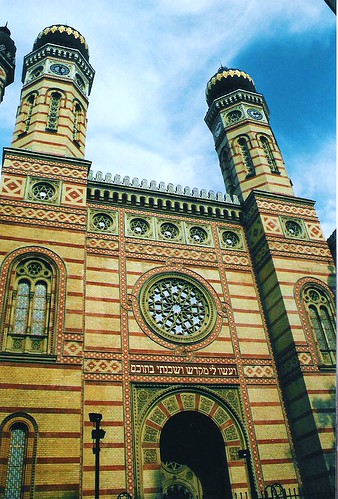 Just got back from Budapest and I have to admit - I was really impressed especially with the modern Jewish culture that surprised me with its existence. I never really had a desire to go to Budapest, it just happens to be a large city in proximity to Prague that is perfect for a cheap weekend trip, but after coming back I am definitely glad I went.
Before I arrived, I had learned a little bit about the history of the Jews in Hungary. Because of its relative distance from Germany and the status of many of the Jews in public affairs, they didn't receive as hard of a blow from the Nazis as other countries (e.g. the sheer amount of Satmar Hassidim who survived), although many were sent to concentration camps by the Arrow Cross Party, the Hungarian equivalent to the Nazi party. Currently, there are around 80,000 Jews in Budapest, the largest Jewish community in Eastern Europe. That huge number is due mostly to the Nazis late arrival in Hungary and the Hungarian government's policy during WWII where they preferred to ship off Jews from the countryside when the Nazis demanded them rather than city Jews who were valuable to the Hungarian economy.
While walking around the city, the Jewish culture was not so apparent except for the tourist attractions, something I have gotten used to in Prague (The Dohany Synagogue, pictured above, is the largest synagogue in Europe, 2nd largest in the world, and Neolog in its philosophy - an early European version of Conservative). It was nice to see a couple kosher restaurants, but I figured that the situation with the Jewish community was similar to that of communities in other post-Communist countries: Spiritually decimated by Stalinism, constant fear of antisemitism, and unwelcoming to others (even Jews) based in their difficult history. I soon found out that this is not necessarily the case.
While walking around the hip, young area of Budapest, formerly the Jewish ghetto, looking for hipster bars, we happened across a chill Bohemian art bar called Siraly that we had noticed earlier. We bought some beers, climbed up the spiral staircase, and sat on some couches in somewhat of a film library with a projector screen. Looking around the room, we noticed that there were framed blown-up photographs of Jewish interest: Yiddish culture, bearded rabbis, etc. Intrigued, I wandered around to see what else I could discover. I soon found canvasses with embroidered Hebrew on them, flyers for a Jewish film festival that was currently happening, and a pamphlet for a 4 day Jewish music festival that happens every summer. Then, to make things even better, I went into the basement to find the bathroom and happened across this unbelievable free-jazz show (free like improv not free like money, although it was free) with this amazing saxophonist and an out of control xylophonist and watched that for a while.
It just keeps getting better and better right? So as we're on our way out, I stop and ask the bartender, "so what's the deal? is this the hipster Jewish hangout?" and in response, two young guys come over from behind the bar and start speaking to me in Hebrew. I guess that was a yes. They start telling me how, while its true that there are a lot of uninvolved Jews, and that there is still visible antisemitism in Budapest, there is a thriving modern areligious community (complete with a secular Jewish high school, one of three) similar to what you would find in Brooklyn or San Franicisco. Turns out one of them is the guitarist for a funky Hebrew hiphop band called Hagesher and they told me that they could show us the hip Jewish sights. Unfortunately, we had to leave early the next morning but it is definitely a place I will have to come back to. He told me to check out the two main Jewish-hipsters-in-Budapest sights, Judapest (who calls Siraly the "non-official Jewish urban place") and Marom. After experiencing that unparalleled level of hasgacha pratit, I decided that this is definitely not my last time in Budapest.
Labelz:
culture,
the jewish world,
travel
4.08.2009
pictures!
Sorry I haven't been posting but I DON'T HAVE INTERNET and I probably never will.
Anyways, I figured out that Picasa is much better than Flickr because I have a whole gig to fill up and they upload real fast. Thanks G-d for google/gmail.
So here is the new link - http://picasaweb.google.com/Eric.Salitsky
All my pictures from this trip so far are uploaded, so enjoy!
I also made a new link at the top so you can use that to quickly check to see when i post more photos. Hopefully there will be some good ones after the weekend when I get back from BERLIN.
I'll post a real post again soon, I promise!
Labelz:
photos
2.19.2009
This is too good to be true
Somehow, the Miami Boys Choir, along with the legendary Jewish summer camp "Israeli" dance choreography, made it to China. This is just too much.
I know this dance well enough to vouch that they are doing it perfectly. One of them must have been on rikud staff at Camp Ramah.
I know this dance well enough to vouch that they are doing it perfectly. One of them must have been on rikud staff at Camp Ramah.
2.16.2009
Weekend to Karlovy Vary
 Thought I would update on what's been going on lately.
Classes started officially last week and they're all very interesting albeit a very different teaching style. Besides for Czech, I'm taking Contemporary Jewish Religious Thought, taught by a former Jesuit Priest; History of the Jews in Bohemia, taught by Rabbi Ron Hoffberg, the only non-Orthodox rabbi in the Czech Republic and leader of the Prague Conservative community; Circulating with the Modern Cinematic Image, basically an intro to European film studies - it's being taught at FAMU, a very prestigious film school in Prague; and Contemporary Culture and Alternative Lifestyles in the Czech Republic, taught by Pavla Johannson, a scholar in sociology and former member of a very popular Czech new wave band in the 80's.

Last weekend I went with Leili, Mich, and Brendon to the small city of Karlovy Vary AKA Carlsbad. It's kind of a touristy spa town known for its hot springs and it's also the birthplace of the famous Czech drink that tastes like Christmas, Becherovka. Throughout the town there are all these water spouts that pump out steamy metallic water that is apparently very good for you. Everyone carries around these strange looking cups and sips on the water all day. We called it our "old person weekend" because we spent the whole time eating, drinking wine, hanging out in the sauna, getting a tour of the Becherovka factory in Czech surrounded by the elderly, relaxing, and getting very cheap massages.
Saturday night I got to see Islands in Prague. That was cool. It's not too often you get to see some indie shows in Europe and that is a band I would have definitely saw even if I was in America. It was a great show.
Yesterday I went with Brandon and Lauren to the last movie of the Shockproof Movie Festival. It was basically a slasher festival but they had some cool exceptions like Visitor Q by Takashi Miike (which I had already seen). We saw this ridiculous 70s exploitation film from Sweden called Thriller - They Call Her One Eye which was unbelievable. The plot didn't matter, the special effects were ridiculous, EVERY death was in slowmotion, all the sex was pornographic, and the main character saws off her own shotgun to go out and kill everyone that ruined her life. It was awesome. Apparently it was one of Quentin Tarantino's influences for Kill Bill.
Anyways, life is great here. It's been snowing pretty hardcore the past week. Tonight I'm going to see what Capoeira is like here so hopefully I won't get my ass kicked for not speaking Czech and for belonging to a different group. Wish me luck.
Labelz:
prague
2.11.2009
2.08.2009
Kutna Hora + Bone Church picture post
Here are pictures from my excursion last week to the medieval silvermining town of Kutna Hora, along with a church made out of human bones. This country is so metalcore.
One Quick Blog About Israel
 I know this is supposed to be a travel blog now, but I can't resist talking about Israeli politics a little bit.
Here are two really interesting articles about Arab Israelis protesting against anti-Arab politics in the Knesset (specifically Avigdor Lieberman, leader of Yisrael Beitenu). The first is here on Ynet and the other is a video from the Guardian.
It is disturbing for me when I see people who hold racist policies in high regard in Israeli politics (or any politics for that matter). Lieberman has shamelessly said on many occasions that he wants to forcefully transfer all Arabs outside of Israel. He is also trying to get all Arab political parties banned from running in the upcoming elections on accounts that they are racist. This is pure Kahanism at its best, and that scares me. It's that type of anger that fuels violence and close-mindedness.
If Baruch Goldstein were still alive, he would vote for Yisrael Beitenu, and wherever Baruch Goldstein's politics lie, I stay far far away. How about instead of ousting an entire ethnicity from your country, warmongering in the process, why don't you actually address the issues and figure out how to improve your current situation? How about working with Israeli Arabs instead of ostracizing them? Seeing how much media attention Lieberman's been getting, I'm a bit nervous about the upcoming Israeli elections.
But I am excited to see how the Holocaust Survivors & Grown Up Green Leaf Party does. Yeah, that's right, its the name of a coalition formed by two parties that could not be any more different from each other. If they get even one seat, I will be the happiest man alive. Their platform is so random that I first thought it was a joke. Why don't all parties start combining in order to get more seats? How about the Communist party and the National Religious party? Or Shas and the environmentalist Party?
UPDATE: I spoke too soon... click here.
2.04.2009
Music and Communism
 Unlike the picture from my first post, this one I actually took
There are a lot of peculiar things that go on in the Czech Republic that don't make any sense to me. Like the type of music that is popular over here. My brain does not comprehend.
Of course there is the standard European obsession over shitty techno and self-destructive divas, but the vast majority of the radiowaves seem to be playing one huge bar mitzvah mixtape circa late 90s. No joke, multiple people have commented on it and we've been trying to figure out why it's like that.
Obviously there are no fifteen minute horas or Debbie Friedmans on the radio, but I can't tell you how many times I've heard the Macarena, the Locomotion, and yes, it's true, the Cotton Eyed Joe. How did the Cotton Eyed Joe travel all the way to the Czech Republic and how is it still popular?!
This phenomenon doesn't only concern songs with cheesy choreographed dances either. Last week I was at the fabled four story club, and I heard DMX not once, but twice in the same night. You know which song I'm talking about: "Ya'll gonna make me lose my mind, up in here, up in here." It was shocking enough the first time it came on, but the second time was too much.
As with all Czech peculiarities, I'm going to blame this on Communism. The Soviets only left in '89 so the Czechs have been quickly adapting to a proper democracy and globalization. That abrupt change has led to some awkward adjustments and the Communist undertones and still very apparent.
Considering that music was very censored during forty years of Soviet occupation, Czechs didn't have access to shitty music, unless it was given special permission from Stalin. So my theory is that they have been slowly catching up to the rest of the world in terms of pop culture, and that seems apparent to me when I hear "Barbie Girl" in the supermarket, Eiffel 65 on the subway, and Sixpence None the Richer at the club.
1.31.2009
Picture Post
By request, I'm putting up my first picture post. It consists of 2 different sets of pictures -
The first is from my trip to the Torture Museum, an obvious tourist trap that got me all excited. It wasn't as extravagant as I had expected, but what they lacked in quality they made up for in brutality and one terrible translator with a dry sense of humor.
The next set is pictures from around Prague, including Vysehrad, one of the oldest parts of Prague and also the location of the CIEE study center and most of my classes.
1.27.2009
Shabbat Praha
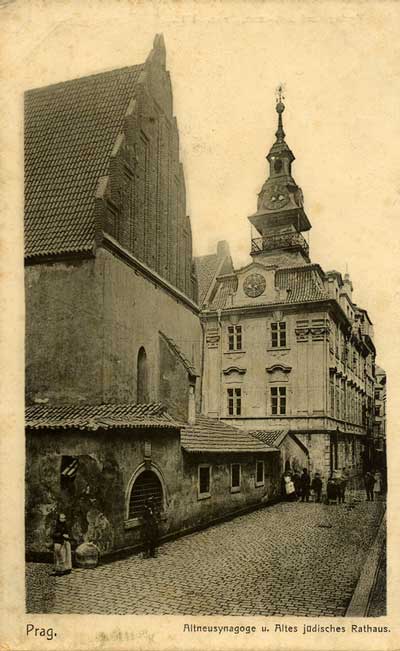
On Shabbas I checked out the Jewish community. At around 3 on Sayurday I headed over to the Jewish quarter and just wandered around, looking at all the beautiful synagogues. It’s crazy to think that the only reason these synagogues are so well preserved is because Hitler was saving them for his Jewish museum after he finished the job. I found the famous one with the golem in it and figured there would probably be mincha so I talked to the guard at the entrance. He was very unfriendly and spoke no English but it seemed apparent that his job was to keep tourists out on Shabbat. So I had a little argument with him, trying to prove to him that I just wanted to go pray, and this British guy told me that he wasn’t going to let people in for a couple minutes. So he showed me around the Jewish quarter, he showed me where the Chabad is and where the kosher restaurant is. He’s one of those Aish miracles who goes to Israel for a week, flips out, and stays in yeshiva for 2 years. He works at the British version of the Discovery channel and he’s in Prague filming for a little while. After services we went to the Jewish community center for Seudah Shlishit which was around the corner and I had a really nice time. There were a bunch of Israelis and Americans, the rabbi was cool and lives on my street, and the Czech ladies were hot.
I’m pumped to spend more time with this community. Shabbas morning services are at the Jerusalem synagogue, the most beautiful synagogue I’ve ever seen and it’s a block from my house. I also hope that I get a volunteer placement working in the Jewish community. There’s a Jewish school that I would love to work at. I added it in on my volunteering application and Jana, the lady in charge of that, told me they were going to work on it. One of the main reasons I’m here in Prague is to get to know what modern European Judaism is like. Is it growing or dying? How much of the Jewish culture is based in thousands of years of history and how much of it is just imported from America or Israel? I wanna set up a Shabbas meal for Mich and Leili and me with the rabbi. He lives like two doors down. Maybe I’ll wait until a know a little more Czech though. Tomorrow I finally start my intensive Czech classes which go on for two weeks before we start real classes. I’ll finally be able to say more than thank you, hello, and two beers please.
1.23.2009
Bein Hashmashot becomes a travel blog (for now)

Since I am now living Prague for the semester, I think that I will be using this blog as a travel journal so that people can check up on me if they are interested. I will try to stay up to date with Israeli politics on whatever else I’ve been writing about but I haven’t posted in a while anyways so I figured this would be a good way to keep in touch without sending out those annoying 5 page emails to everyone I know.
Yesterday I was sitting near the front of the tram with my roommate Dan, and seated in front of us was a blind, frail man in poor health probably in his late seventies. He had bandages over his eyes and sunglasses in front of those, he had a seeing-eye dog, and used metal crutches as it looked like he had some issues walking as well. He wore a bright yellow parka and a violin slung behind his back, possibly for street performing. He sat there peacefully moving his head around, humming softly to himself, and occasionally twitching mildly. As I watched this man, I kept looking back and forth from this man to the corporate chains that we were passing. As I noticed the Sony, the KFC, and the McDonald’s I began to think about how much Prague has changed during his lifetime and how he may be completely oblivious to it. He lived through Hitler’s occupation of the Czech Republic, he felt the communist control after that for 40 years, he was there for the Velvet Revolution in the late 80s, and he is surrounded by the modern capitalist mentality that has boosted the country’s economy yet permanently altered the culture. He probably has his route that he has taken every day for many years and the sudden changing aesthetic of the city may be beyond him. I felt bad thinking about that, and I started to think about how this new zeitgeist for the city is somewhat my fault as an American. Who knows if he prefers capitalism to communism, it may not make any difference at all to him as a sickly street musician, but I felt like I owed him some sort of obligation.
As he arrived towards his stop he began to stand up with the help of his crutches and he called out behind him in Czech. I don’t speak a word of Czech so it meant nothing to me, but in my head, I translated what he said as, “Youth! Can someone please give me a hand?” I looked over at Dan and saw that he was thinking that same thing as me, but none of the Czech people behind me were doing anything. The bus began to get a little bumpy as it took a sharp turn and I saw the man struggle to stay up on his crutches while he called out again behind him. I looked back at the Czechs again and saw that they were looking at me. They may have been staring at me as everyone has for just being American but I interpreted that look as, “It’s your move.” I then stood up and put my hand on his arm to let him know that I was there if he wanted my help. He said something to me in Czech which was either telling me to help him down the stairs or yelling at me to get off him. Since I had no idea what he said, I held him tighter and thought to myself, “This is my task, I have to finish it.”
When the tram came to a stop, I carefully supported his arm as he slowly made his way down. As he finished stepping off the tram he repeated “děkuji” (thank you – the only word I know) multiple times but as he overcame the last stair he turned around to look at me and said it louder. I don’t know if he wanted to emphasize his gratefulness or if I had irritated him by taking pity on him, but either way, getting looked in the face by a blind man is somewhat of a haunting feeling. As I sat back down, the entire tram was quiet and I wondered if what I did was right, and if the Czech people behind me thought I was an idiot or a good man. It didn’t seem to matter at that point because the deed was done, but the image of man’s face was implanted in my mind along with the added layer of my uncertainty at his motives for “looking” at me like that. I can see his scraggly white beard, impenetrable sunglasses, and furrowed brow very clearly in my mind and will continue to think about it until it gets overlaid with even more fascinating experiences.
Some of those include Leili forcing me to run through a street mall in order to get to a Beatles cover band show because it was too good to miss even a second of it. She was right.
Or tonight when Michael, my Czech roommate, brought us to a teahouse with floor pillows, hookah, tapestry-laiden cave alcoves and New-Agey medieval music. It felt like we were all hobbits being beckoned to return to the Shire.
On another note, tomorrow is going to be my first Shabbat in Prague. My program set up all the really Jewey kids in the center of town, a block away from the Jerusalem Synagogue, the most beautiful synagogue I’ve ever seen in my life. So that’s a plus. I will definitely go check that out. But I’m trying to decide if I’m going to start breaking Shabbat this semester. I don’t see how I can’t. What would I do, sit at home by myself all day. Even parts of the program are on Shabbat. If I want to have the best experience, I have to leave my safety zone, and unfortunately, that means I might have to leave my jewish zone at some points as well. I will at least make certain rules for myself like – I won’t do actual work or I won’t use my phone or computer. We’ll see how G-d feels about this in the afterlife but for now this decision is for myself and I think it’s the best one.
12.15.2008
Vic Thrill and Curly Oxide
 I just discovered this amazing story about a hipster glam-rocker from Williamsburg who meets a rebellious Satmar Hassid from down the street and they start a band together.
NPR's This American Life has a really interesting story about it from 2005 which is a hell of a listen. (It starts 6 minutes in) Apparently, Tina Fey heard this episode and it inspired her to write a script for a movie about it which will be coming out in 2009. Lorne Michaels is producing it (so we can expect to see some SNL cameos) and Sacha Baron Cohen is playing Curly Oxide, the hasid.
Here's a sample of what they sound like. It's pretty cool, and this movie is gonna be awesome:
Labelz:
identity,
movies,
music,
the jewish world
Subscribe to:
Posts (Atom)
